Difference between an undefined value and a missing property in TypeScript

 Anmol Kansal•Jan 30, 2023•2 min read
There is one serious issue with the default behavior of the typescript compiler w.r.t optional types.
🧠 Understanding Optional Properties
To properly understand the difference between an undefined value and a missing property, let's take an example -
Let's say we have the following ProfilePicture component -
type Props = {
  src?: string;
};

export const ProfilePicture = (props: Props): JSX.Element => {
  const defaultProps = {
    alt: "Profile Picture",
    src: `https://api.dicebear.com/5.x/miniavs/svg`
  };

  return <img {...defaultProps} {...props} />;
};
Here, we are expecting an optional prop src.
If src is not passed, we are rendering the default profile picture -

💡 The Two Intended Cases
Whenever we make any property optional (here src prop), we want to imply the following two cases -
srcis passed a string value<ProfilePicture src="https://api.dicebear.com/5.x/avataaars/svg?seed=Felix" />srcis not passed at all - (missingproperty)//default profile picture will be rendered in this case <ProfilePicture />
⚡ The Problem: Silent Failures with Undefined
However, TypeScript, by default, doesn't differentiate between undefined value and a missing property.
This means that it won't complain even if we accidentally passed an undefined value to src-
// ❌ This breaks our application ❌
<ProfilePicture src={undefined} />
This will override our default value of src which will, in turn, break our application -
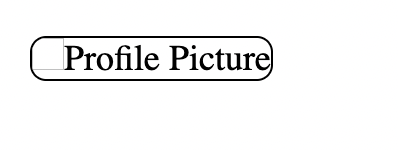
🚀 The Fix: exactOptionalPropertyTypes
To prevent such issues, TypeScript 4.4 introduced a new flag exactOptionalPropertyTypes ↗ which specifies that optional property types should be interpreted exactly as written, meaning that | undefined is not added to the type.
Now, with exactOptionalPropertyTypes flag enabled, passing an undefined value will throw an error -
// ❌  Type 'undefined' is not assignable to type 'string'.
<ProfilePicture src={undefined} />
Thanks for reading ❤️!
Table of Contents
Anmol Kansal
Full Stack Developer
I have close to 5 years of industry experience building scalable web interfaces and robust frontend infrastructures. I specialize in React, TypeScript, Next.js, and full-stack JavaScript — with a strong focus on clean code, performant bundle loading, and highly optimized animation layers.